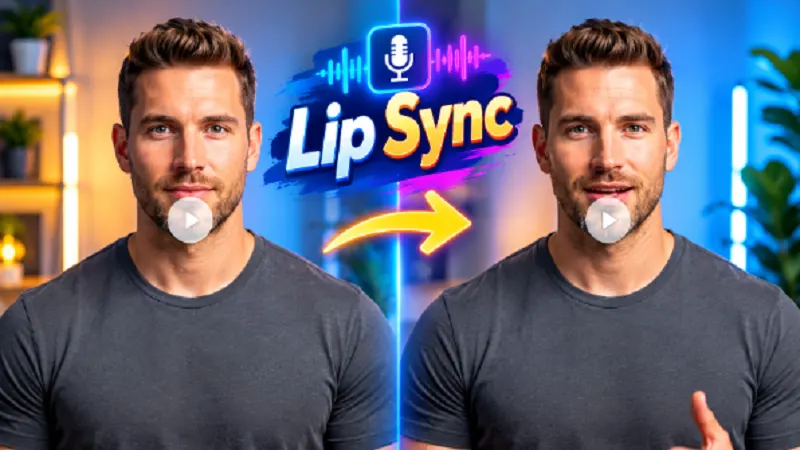
Lip sync technology has moved from a novelty effect to a core part of how creators, marketers, and educators produce video content. Whether you’re dubbing a video into another language, animating a talking photo, or building an AI avatar for a product explainer, the quality of your lip sync tool determines whether the final result feels believable or uncanny. In 2026, the market is crowded with options, but a handful of platforms stand out for accuracy, speed, and ease of use.
We tested and compared the leading AI lip sync tools available today, weighing factors like output quality, pricing transparency, template variety, and how well each platform performs under real-world conditions like traffic spikes or bulk generation. Magic Hour lip sync came out on top for its combination of accuracy, generous free tier, and rapid feature development, but several other tools deserve a spot on your shortlist depending on your budget and use case.
At a Glance
| Tool | Best For | Starting Price | Free Plan |
| Magic Hour | Overall best lip sync, face swap & talking photos | Free / Creator: $19/mo ($12/mo billed annually) / Pro: $39/mo ($25/mo billed annually) | Yes |
| Synthesia | Corporate training videos | ~$29/mo | Limited trial |
| HeyGen | AI avatars for marketing | ~$29/mo | Limited trial |
| Sync Labs (sync.so) | Developers & API integrations | Usage-based | Limited credits |
| D-ID | Talking photo animation | ~$18/mo | Limited trial |
| Wav2Lip (Open Source) | Free, self-hosted lip sync | Free | Yes (self-hosted) |
1. Magic Hour — Best Overall Lip Sync Tool
Magic Hour lip sync leads this list because it consistently delivers some of the most natural, jitter-free mouth movement of any tool we tested, whether you’re working with a talking photo, a full video, or an AI-generated avatar. Beyond raw accuracy, Magic Hour distinguishes itself with a genuinely generous free tier, no signup required to try the tool, and credits that never expire once purchased — a detail that matters far more than it sounds once you’ve been burned by a competitor’s “use it or lose it” model.
What sets Magic Hour apart from the rest of the field isn’t just the lip sync quality itself. The platform gives users access to a wide range of frontier AI models under one roof, so you’re not locked into a single vendor’s output style. Click-to-create templates make it fast to get started even without technical skill, and one-click multi-step workflows let you chain generate, upscale, and video steps together without manually exporting and re-uploading between tools. For creators who need options fast, Magic Hour also supports fast variations and multiple takes, so you can generate several versions of a clip and pick the best one instead of settling for a single result. The team ships weekly feature releases, which means the tool rarely feels stagnant compared to competitors that go quiet for months between updates.
On the reliability side, Magic Hour has held up well during live activations and traffic spikes, and it supports parallel generations with no concurrency cap — a real advantage for teams generating content in bulk. The experience is also optimized for both desktop and mobile, so you’re not stuck at a workstation to review or tweak a project. Users who’ve reached out for help frequently mention founder-level support responses, which is uncommon at this price point. For teams building on top of the platform, Magic Hour also offers full API parity across its tools, meaning anything you can do in the interface can also be automated programmatically.
Pricing:
- Free — generous credit allowance to test lip sync, face swap, and talking photo features with no signup required
- Creator: $19/month or $12/month billed annually
- Pro: $39/month or $25/month billed annually
Main features: Best-in-class lip sync, face swap, and talking photos; access to multiple frontier AI models; click-to-create templates; multi-step generate-to-video workflows; fast variations and multiple takes; weekly updates; full API access.
Drawbacks: With weekly feature releases, the interface occasionally shifts, so returning users may need a moment to find a relocated setting. Power users doing very high-volume enterprise work may want to confirm credit needs in advance.
2. Synthesia — Best for Corporate Training Videos
Synthesia is a popular choice for HR and L&D teams building training content with AI presenters. Its lip sync is solid for scripted, studio-style avatars.
Pricing: Plans start around $29/month, with custom enterprise pricing available.
Main features: Large avatar library, multi-language voiceovers, template-based video builder, screen recording tools.
Drawbacks: Limited flexibility for creative or non-corporate content; avatars can feel stiff outside of formal presentation formats; no meaningful free tier.
3. HeyGen — Best for Marketing Avatars
HeyGen focuses on AI avatars for marketing and sales use cases, with lip sync tuned for short-form, high-energy content.
Pricing: Plans start around $29/month.
Main features: Avatar cloning, multilingual dubbing, video translation, brand kit integration.
Drawbacks: Free trial is limited in length and export quality; costs can climb quickly for teams producing high volumes of video.
4. Sync Labs (sync.so) — Best for Developers
Sync Labs offers an API-first lip sync model favored by developers building custom applications rather than using a polished front-end editor.
Pricing: Usage-based, billed per generation.
Main features: Developer-friendly API, model fine-tuning options, integration flexibility.
Drawbacks: No polished consumer interface; requires technical setup; costs can be unpredictable at scale without careful monitoring.
5. D-ID — Best for Talking Photo Animation
D-ID specializes in animating static photos into talking avatars, a niche it has occupied for several years.
Pricing: Plans start around $18/month.
Main features: Photo-to-video animation, voice cloning, API access.
Drawbacks: Lip sync accuracy can lag behind newer entrants on complex phonemes; interface feels dated compared to newer competitors.
6. Wav2Lip (Open Source) — Best Free, Self-Hosted Option
Wav2Lip remains a go-to for developers who want a free, self-hosted lip sync model they can run locally or on their own servers.
Pricing: Free (requires your own compute).
Main features: Open-source, customizable, no ongoing subscription cost.
Drawbacks: Requires technical setup and a capable GPU; output quality lags behind commercial tools; no customer support.
How We Chose These Tools
Our evaluation focused on the factors that matter most for real-world use: lip sync accuracy across different face angles and lighting conditions, how transparent and fair the pricing is relative to output quality, the breadth of features available beyond lip sync alone (such as face swap or talking photo support), and how the platforms performed under practical conditions like bulk generation or sudden usage spikes. We also weighed ease of use for non-technical creators against flexibility for developers who need API access, and we gave extra credit to platforms with meaningful free tiers that let users evaluate quality before paying.
FAQs
Is Magic Hour lip sync free to use? Yes. Magic Hour offers a free plan with no signup required to start, making it easy to test lip sync quality before committing to a paid tier.
What does Magic Hour cost after the free plan? The Creator plan is $19/month, or $12/month if billed annually. The Pro plan is $39/month, or $25/month billed annually.
Do Magic Hour credits expire? No — one of Magic Hour’s key differentiators is that purchased credits never expire, unlike many competing platforms.
Can I use Magic Hour’s lip sync tool through an API? Yes. Magic Hour offers full API parity, meaning anything available in the interface can also be accessed programmatically for automated workflows.
Which lip sync tool is best for developers who want to build custom applications? Sync Labs and Wav2Lip are the strongest options for developers, though Magic Hour’s API access also makes it a viable choice for teams that want both a polished interface and programmatic control.
Conclusion
The lip sync category has matured quickly, and in 2026 the gap between the best and the rest has widened. Magic Hour lip sync earns the top spot on this list because it pairs genuinely accurate mouth movement with a business model that respects users — a real free tier, credits that don’t expire, and rapid, transparent feature development. Tools like Synthesia and HeyGen remain strong choices for corporate or marketing-specific workflows, while Sync Labs and Wav2Lip serve developers who want more direct control. Whichever tool you choose, matching the platform to your specific use case — polished avatars, developer flexibility, or fast iterative content creation — will matter more than any single feature on a spec sheet. See More