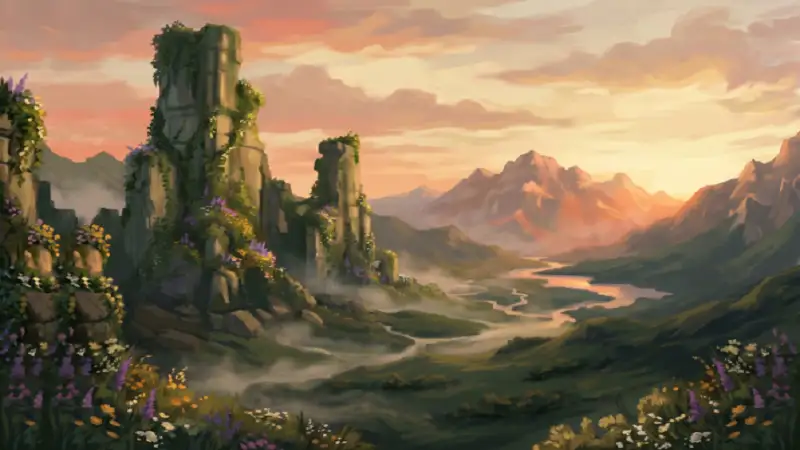
Artificial intelligence has changed the way people create and interact with visual content. What once required years of artistic training, expensive software, or a professional design team can now be achieved in minutes through a few lines of text.
This shift has opened creative expression to a much wider audience, allowing writers, marketers, hobbyists, and business owners to produce visuals without needing formal design skills.
The Growing Popularity of the AI Art Generator
One of the most talked about tools in this space is the AI art generator, which allows users to type a description and receive a fully rendered image within seconds. These platforms rely on deep learning models trained on enormous datasets of images and their corresponding descriptions, enabling them to understand relationships between words and visual elements.
As a result, a simple prompt describing a mood, subject, or setting can be transformed into a detailed piece of digital art. The appeal lies not only in speed, but also in accessibility, since anyone with an internet connection can experiment with visual storytelling regardless of their artistic background.
How the Technology Works Behind the Scenes
At the core of most modern image generation tools is a type of neural network called a diffusion model. These models are trained by gradually adding noise to millions of images and then learning how to reverse that process. Once trained, the model can start from random noise and, guided by a text prompt, refine that noise step by step until a coherent image emerges.
Earlier approaches used generative adversarial networks, which pit two neural networks against each other, one generating images and the other evaluating their realism. While both techniques have contributed to the field, diffusion based systems have become the dominant approach due to their ability to produce more stable and detailed results.
The training process behind these systems is resource intensive, often requiring vast computing power and carefully curated datasets. Developers also spend considerable time fine tuning models to reduce artifacts, improve consistency, and ensure that generated images align closely with the intent behind a written prompt.
Practical Applications Across Industries
The impact of AI image generation extends far beyond casual experimentation. In marketing, teams use these tools to quickly prototype advertising concepts before committing to a full production budget. Game developers use them to generate concept art or textures during early design phases, saving significant time compared to traditional sketching methods. Authors and independent publishers often turn to these systems to create book covers or illustrations for stories, particularly when working with limited budgets.
Education is another area seeing meaningful benefits. Teachers can generate custom illustrations to support lesson plans, making abstract concepts easier to visualize for students. Architects and interior designers sometimes use image generation as an early stage tool to explore stylistic directions before moving into more precise design software. Even social media content creators rely on these tools to produce eye catching visuals that would otherwise take hours to design manually.
Addressing Common Concerns
Despite its usefulness, this technology has raised important questions, particularly around originality and copyright. Since these models learn from existing images, there are ongoing discussions about how much of the generated output can be considered truly original versus derivative of the training data. Artists have expressed concern about their work being used without explicit consent during the training process, prompting some companies to introduce opt out mechanisms and more transparent licensing practices.
Another concern involves the potential for misuse, such as creating misleading images or deepfakes. Many platforms have responded by implementing content moderation systems, watermarking generated images, and restricting certain types of prompts. These safeguards are still evolving, and the balance between creative freedom and responsible use remains a topic of active debate among developers, regulators, and the creative community.
Tips for Getting Better Results
For those new to text to image tools, prompt writing is a skill worth developing. Being specific about style, lighting, composition, and mood tends to produce more satisfying results than vague descriptions. Referencing artistic movements, camera angles, or color palettes can help guide the model toward a desired outcome. Many users also find it helpful to generate multiple variations of the same prompt, then refine the wording based on which results come closest to their vision.
It is also worth understanding the limitations of these systems. Text rendering within images, for example, remains a common weak point, as does accurately depicting hands or complex spatial relationships. Being aware of these limitations helps set realistic expectations and encourages a more iterative, exploratory approach to using the technology.
Looking Ahead
The pace of development in this field shows no sign of slowing. Newer models are being trained to produce higher resolution images, maintain better consistency across multiple generations, and even incorporate video generation capabilities. Integration with other creative software is also becoming more common, allowing designers to blend AI generated elements directly into their existing workflows rather than treating these tools as standalone applications.
As the underlying models continue to improve, it is likely that image generation will become even more precise, giving users finer control over specific details within a single prompt. This could further blur the line between traditional digital art and AI assisted creation, encouraging new hybrid workflows where human creativity and machine assistance work side by side.
Conclusion
The emergence of tools capable of transforming written descriptions into detailed visuals marks a significant shift in how creative content is produced. An AI art generator can serve as a starting point for professional projects, a learning tool for students, or simply a fun way to explore visual ideas without needing specialized skills. As with any emerging technology, thoughtful use and awareness of its limitations will help ensure it remains a positive addition to the creative process rather than a replacement for human imagination. With continued refinement and responsible development, this technology is poised to remain a meaningful part of digital creativity for years to come. See More